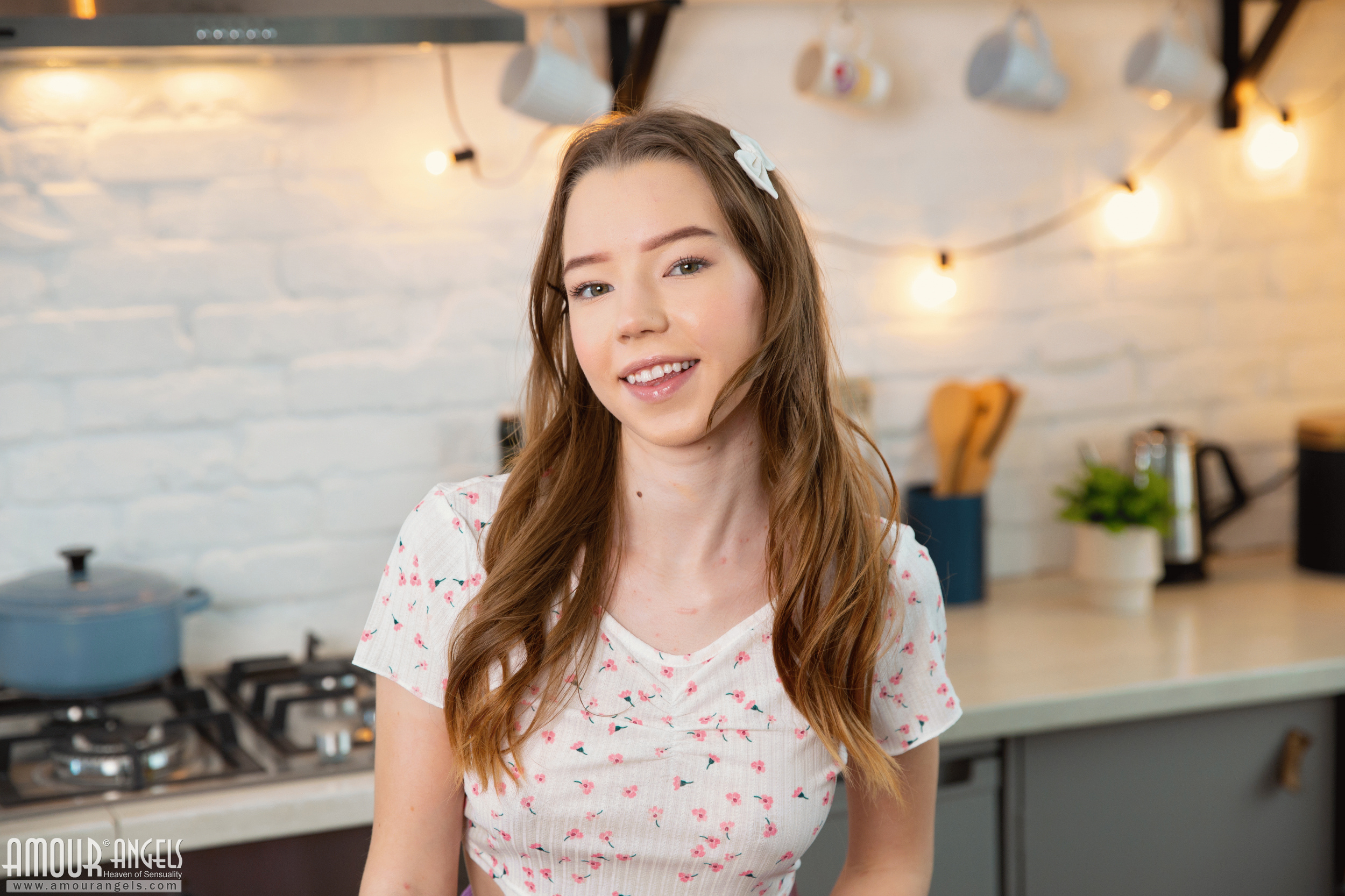
For years, Selena Cooper was known among her friends as the calm one. She was the grounded person in the room, the steady voice in difficult conversations, the colleague who handled chaos with surprising grace. On the outside, she seemed unshakeable.
But internally, Selena lived in a quiet storm she didn’t know how to name. Stress didn’t hit her loudly—it seeped into her life invisibly. It was the tightening in her jaw, the shallow breaths she didn’t notice, the sudden headaches in the late afternoon, and the nights where her mind felt like it was still running long after the world fell asleep.
“I thought I was just being strong,” Selena said. “I didn’t realize I was slowly drowning in stress because I had never learned how to recognize it.”
Her turning point didn’t come from a dramatic burnout moment. Instead, it arrived quietly, one spring morning, when she woke with a strange heaviness in her chest. There was no crisis the day before, no urgent deadline, no argument. And yet something inside felt wrong—misaligned, depleted, like her emotional core was fraying. That morning, as she sat at her kitchen table staring at her untouched cup of tea, she understood that stress had become the silent architect of her life.
What followed was a long, sometimes uncomfortable, deeply transformative journey into understanding stress—not just as an emotion, but as a physiological condition that changes the way the body breathes, thinks, reacts, and heals. Selena’s experience reveals that effective stress relief is not about quick fixes or inspirational quotes. It’s about rebuilding trust between the mind and the body, learning the signals we ignore, and applying techniques rooted in science and self-awareness rather than vague promises.
This is her journey and her guidance—told with honesty, compassion, and grounded insight—for anyone who wants stress relief techniques that truly work.
The slow erosion of inner balance
Selena now sees that her stress did not accumulate because life was unusually hard. It accumulated because she became unusually good at suppressing her reactions. She moved through her days with a kind of polished efficiency, checking off tasks, helping others, adapting to situations, and masking discomfort with competence. People praised her for her calmness without realizing that calmness was armor.
Over time, the mismatch between her inner world and her outer presentation widened. She slept, but her sleep lacked depth. She ate, but her body didn’t feel nourished. She took breaks, yet never felt restored. Beneath her steady voice was a pulse that beat too quickly. Beneath her neutral expression was a tension she carried in her shoulders for so long that it felt like part of her identity.
Stress, she learned, is not just the experience of overwhelm. It is the experience of disconnection. The body sends signals, and the mind refuses to listen. The nervous system screams in subtle ways—tight muscles, rapid breathing, difficulty concentrating—and instead of pausing, we push harder.
“I had ignored my stress for so long that it became my normal,” she said. “And when stress becomes normal, relief becomes impossible.”
How stress changes the body—what Selena finally understood
As she began researching and speaking with professionals, Selena discovered that her symptoms were not psychological flaws; they were physiological reactions. Chronic stress activates the sympathetic nervous system—the body’s “fight or flight” mode—far beyond what it evolved to handle. Heart rate increases. Breathing quickens. Muscles tighten. Cortisol rises. The mind becomes hypervigilant, even in calm environments.
This was her life: not crises, but chronic activation.
She found profound clarity in an article from Mayo Clinic, which explained how untreated stress can disrupt nearly every system in the body—immune function, digestion, sleep, memory, and emotional stability. Reading that, Selena felt both validated and frightened. She understood that stress relief was not optional self-care; it was essential maintenance for survival.
She began approaching stress not as something to avoid, but as something to understand. Instead of trying to “be strong,” she tried to be present. And freedom began there. Tree of Life Beauty Facial Skin Care Set, Brightening, Firming, Hydrating, Dry Face, Dermatologist Tested – Trio Power Kit, Vitamin C, Retinol and Hyaluronic Acid, 3 count of 1 Fl Oz
The first breakthrough: learning to breathe again
The earliest change in Selena’s life came from something deceptively simple: breathing. Not the automatic, shallow kind that rushes in and out while we think, work, or worry, but intentional breath—the kind that signals the nervous system to stand down. For years, Selena had breathed from the top of her chest, quick and light, without ever realizing how much this sustained physiological tension.
She discovered that slow, deep breathing wasn’t merely calming; it was corrective. When done correctly, it sends a message through the vagus nerve telling the brain that danger has passed. The heart rate slows. Muscles soften. Thoughts stop spiraling. For the first time in years, she felt her body release without her forcing it.
“It was like my body exhaled years of tension in a few minutes,” she said. “I didn’t know until then that stress had changed my breathing.”
Breathing became her anchor—something she returned to several times a day. She no longer waited for stress to erupt before responding. She created space before the tension built. This shifted her entire relationship with stress. Her body trusted her again.
The deeper layers: understanding emotional residue
As her breathing practice softened her physiology, integrated memories began resurfacing—old conflicts she had avoided, disappointments she never processed, guilt she didn’t know she carried. She realized that stress relief is not simply about calming the nervous system; it’s about moving stored emotional weight out of the body.
She learned that unprocessed emotions become physical. An unresolved argument manifests as jaw tightness. An unspoken resentment sits in the stomach. A repressed fear appears as restlessness. The body holds what the mind refuses to face.
One evening, during a guided relaxation session, she felt her throat tighten unexpectedly. Instead of pushing the sensation away, she leaned into it. Something loosened—not dramatically, not cathartically, but quietly. She understood then that stress relief techniques that ignore emotional residue offer only temporary relief. Effective techniques work from the inside outward, not from the outside inward.
The power of slowing down
Selena’s biggest revelation came during a moment that would seem trivial to anyone else. She was washing dishes one night and realized that her mind wasn’t racing. She wasn’t planning, analyzing, or replaying conversations. She was simply washing dishes. The warm water, the rhythmic motion, the clinking of plates—it all felt grounding.
She realized that stress had previously robbed her of presence. Her body was in one place while her mind lived somewhere else entirely. Now, her attention was beginning to reunite with her physical experience. This was not mindfulness in the formal sense; it was mindfulness in the lived sense. The skill of noticing without judgement.
She began applying this presence to other moments—walking, cooking, showering, waking up, falling asleep. The world did not change, but her relationship to it did. Stress did not vanish, but it no longer dominated.
Movement that feels like medicine
Exercise had always been a checkbox in Selena’s life—something she did for health, appearance, or routine. But once she understood the neurochemical role movement plays in regulating stress, she started approaching it differently. Gentle stretching released tension stored in her hips. Slow yoga quieted her internal chatter. Light evening walks regulated her breath and lowered nighttime cortisol.
Movement became less about results and more about sensation. Instead of forcing her body to perform, she allowed it to express. She noticed the difference: when movement was punitive, her stress increased. When movement was nurturing, her stress dissolved.
Rewiring stress patterns through rest
Sleep became a central part of her recovery. Not simply the hours she spent in bed, but the quality of how she approached rest. She realized she had never truly learned how to unwind. Even when lying down, she was still mentally “working.” Her nervous system never stepped off the stage.
She created a new relationship with nighttime: dimming lights, lowering stimulation, softening her internal voice. She stopped framing rest as laziness or inefficiency and began seeing it as maintenance. Rest was not a break from productivity—it was the foundation of it.
As her sleep deepened, her stress resilience strengthened. Stress stopped sticking to her as easily. Her body could recover. Her brain could process. Her emotions could settle.
Letting go of emotional perfectionism
Perhaps one of Selena’s most profound breakthroughs was recognizing her habit of emotional perfectionism. She believed that stress relief required her to feel happy, grateful, or calm before she could relax. But this belief created pressure. When she didn’t feel calm, she felt she was failing. When she couldn’t instantly regulate her emotions, she blamed herself.
One therapist told her something that cracked this illusion:
“You don’t have to feel good to begin healing. You only have to feel willing.”
This reframe liberated her. Stress relief didn’t require perfect emotions—it required honest ones. She stopped forcing positivity and instead focused on permission: permission to rest, permission to pause, permission to feel uncomfortable without catastrophizing.
The subtle transformation
Months into her journey, Selena began noticing changes small enough to overlook but profound enough to matter. She woke without dread. She ate without tension. She worked without feeling underwater. She breathed deeply without effort. Stress no longer lived in her muscles or hid inside her thoughts. It passed through her instead of settling.
Her relationships improved, not because other people changed, but because she was no longer managing life from a place of constant depletion. Her voice became softer yet more assertive. Her decisions became clearer. Her energy felt warm instead of brittle.
“Stress didn’t disappear,” she said. “I just became someone who knew how to meet it.”
Selena’s quiet advice
If Selena could speak to anyone struggling with stress right now, she would not tell them to meditate harder or stay positive. She would tell them to begin with the smallest, gentlest shift imaginable: one honest breath. She would tell them that stress relief is not a single action, but a relationship we rebuild with ourselves. She would tell them that techniques work when they are chosen with intention and practiced with compassion, not perfection.
She would remind them that science supports them—research on stress regulation, nervous system responses, and emotional health is abundant. She would point them to trusted resources like Harvard Health’s guide on stress and encourage them to learn the language of their own bodies.
And finally, she would say this: “Stress relief isn’t about achieving calm. It’s about creating space where calm can return on its own.”