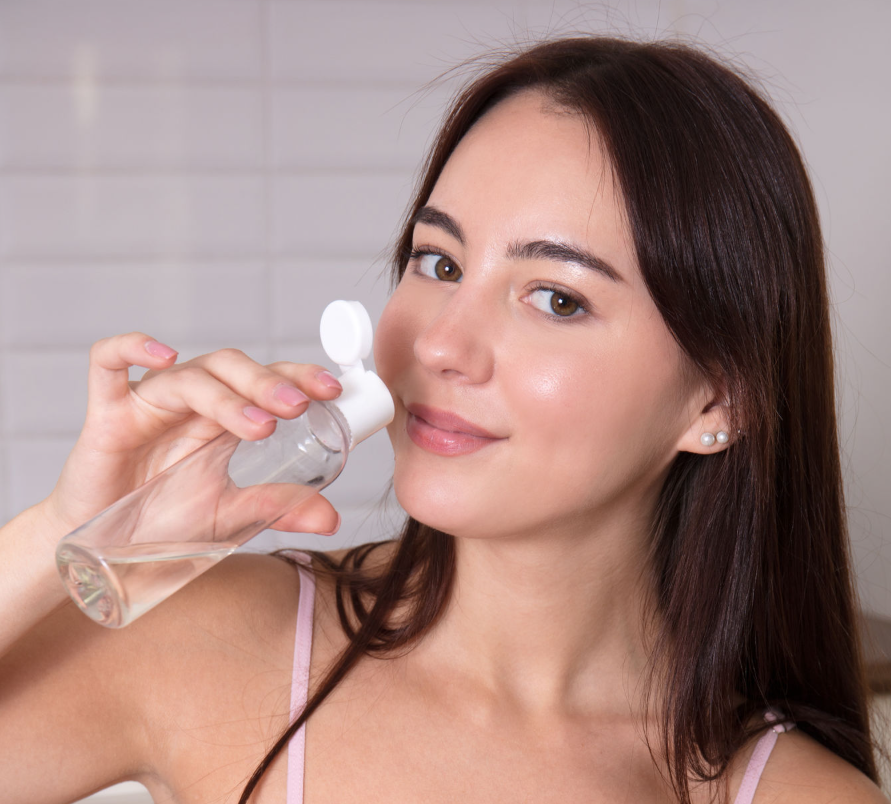

For most of her adult life, Hannah Foster was the kind of woman people admired for her composure. She held a demanding position as a senior account manager, guided junior staff with a steady hand, and handled clients with warm, confident professionalism.

Hannah Foster shares her experience, gives guidance on self-care routines for stress recovery
She rarely raised her voice, rarely complained, and rarely let anyone see the storm that lived just beneath her surface. But privately, she was unraveling in ways even she didn’t fully recognize. Stress had become so woven into her daily life that she began mistaking survival for normalcy.
“I thought being constantly overwhelmed meant I was working hard,” Hannah said. “I thought exhaustion was proof that I was doing my best. I didn’t realize that my body had been running on fumes for years.”
The shift from “functioning” to “barely holding on” was so gradual she almost missed it. Little signs appeared first: waking up tired no matter how early she slept, forgetting simple tasks, feeling a tightness in her chest during quiet moments, responding to small inconveniences with a level of tension that surprised even her. But she pushed through. She always pushed through. Until one day her doctor told her gently but firmly that the patterns she was describing were not simply fatigue—they were symptoms of long-term stress overload.
Stress recovery, her doctor explained, is not something that happens automatically once the stressful moment passes. It requires deliberate care, sustained gentleness, and practices that help the nervous system unlearn its habit of living in a constant state of alert. Over months of exploration—and many moments of honesty—Hannah began building the self-care routines that would eventually restore balance to her life.
This is her story, told through the slow rediscovery of what it means to rest, to soften, and to recover from years of carrying far more than her body was built to hold.
The hidden cost of always coping
Hannah’s stress wasn’t loud. It didn’t show up as panic attacks, explosive emotions, or dramatic burnout. It was quiet, efficient, patient. She handled crisis after crisis with surprising calm, but each response took something from her—an unacknowledged withdrawal from an already depleted account. Over years, those withdrawals added up until she found herself living in a constant state of background tension.
She didn’t know she was stressed because she had adapted to it. The human nervous system can normalize anything if exposed to it long enough. But normalization is not the same as healing. Over time, her breathing grew shallow. Her nights became restless. Her mornings required increasing amounts of caffeine. Small decisions felt heavy. A simple email could make her chest tighten.
Her doctor described this state as chronic sympathetic activation—when the body’s stress response system stays “on” even when life is no longer demanding immediate action. It explained why Hannah couldn’t relax even during peaceful weekends, why she snapped internally at the smallest disruptions, and why her body felt as if she was perpetually bracing for something.
That conversation marked the beginning of her commitment to self-care. Not the trendy kind. Not spa days or quick fixes. But the deeper, slower kind—routines that help the nervous system step out of survival mode and re-learn a rhythm that feels safe again.
The moment she realized self-care was no longer optional
One memory still stands out to her. She had taken a day off specifically to rest. She turned off her email, made tea, opened a book, and sat on the couch. It should have been peaceful, but her body refused to follow. Her mind spun relentlessly. Her chest fluttered with tension. She couldn’t concentrate. She couldn’t enjoy stillness. She felt like someone who had forgotten how to relax.
That day, more than any other, convinced her that stress had become her default state. She needed more than rest. She needed recovery. And recovery, she learned, requires a very specific type of self-care: one that honors the nervous system instead of distracting from it.
In her search for guidance, she found herself returning repeatedly to a medically reviewed article from Mayo Clinic about long-term stress and its physiological consequences—a resource she credits for giving her a scientific framework for her emotional experience. She bookmarked it as a reminder that what she was going through was real, measurable, and reversible. Mayo Clinic – Understanding long-term stress and its impact
Rebuilding herself through small, deliberate self-care rituals
Hannah’s self-care routine didn’t arrive fully formed. It didn’t come from a list she found online or a sudden realization. It emerged through trial, reflection, and a careful listening to what her body responded to. The most meaningful practices were the ones that worked slowly—not because they were weak, but because they supported her nervous system gently and consistently.
The evening ritual that reintroduced her to calm
Hannah’s evenings used to look like quiet chaos. She would leave work mentally drained but continue thinking about projects long after dinner. Her mind replayed conversations and anticipated future conflicts. Evenings became another version of daytime—just without the meetings. When she finally climbed into bed, her body was still tightly wound.
Her first step toward recovery was creating an evening boundary. She dimmed her lights earlier. She stopped multitasking after 7 p.m. She allowed herself the luxury of slowness. She replaced late-night email checking with a warm shower and soft music. It wasn’t about “disconnecting.” It was about allowing her senses to disengage from stimulation.
Within weeks, this ritual became an anchor—a way of telling her nervous system that she no longer needed to anticipate anything. She began to breathe deeper. Her thoughts lost their urgency. And for the first time in years, she fell asleep without feeling like she was carrying the weight of the day into her dreams.
The surprising power of restorative mornings
Mornings used to be Hannah’s most stressful time. She woke with a jolt, rushed through routines, and fueled herself with caffeine before her mind had fully caught up. Her cortisol levels—and therefore her sense of urgency—spiked instantly.
Her therapist suggested something simple: spend the first ten minutes of the morning without stimulation. No phone. No racing to-do lists. No instant transition into performance mode. Just light, quiet, and intention.
Hannah began opening her blinds, taking slow breaths, and allowing her mind to arrive before her responsibilities did. This small shift lowered the internal pressure she had grown so accustomed to. It also set the tone for the rest of the day. She realized that when the day begins with gentleness, her nervous system remains steadier for hours.
Integrating supplements into her self-care routine
For a long time, Hannah was skeptical about supplements. She worried they were just wellness trends disguised as solutions. But when she learned how deeply long-term stress affects mineral levels, neurotransmitters, and hormone rhythms, she began to see supplements not as shortcuts but as support systems—ways to restore what chronic tension had depleted.
Each supplement she chose filled a gap she had unknowingly created through years of stress. But more importantly, she discovered that supplements worked only when integrated with routines that respected her body’s limits. They weren’t magic. They were companions.
Magnesium: restoring the ability to soften
Magnesium became her first and most important support. Her stress had kept her muscles in a perpetual state of contraction, like a tightly coiled spring that never fully released. Over time, magnesium helped ease that reflexive tension. Her jaw unclenched more naturally. Her shoulders dropped without conscious effort. Her breath deepened.
More than anything, magnesium helped restore an internal softness she had forgotten was possible. It didn’t sedate her—it allowed her nervous system to stop gripping everything.
L-theanine: giving her mind space to breathe
If magnesium helped her body exhale, L-theanine helped her thoughts find space. Instead of racing or spiraling, her mind felt more open, less compressed by urgency. She noticed that she transitioned between activities more gently. Even stressful conversations felt easier to process.
It didn’t make her passive or sleepy. It simply dialed down the internal volume long enough for her to hear herself again.
Ashwagandha: rebuilding her stress resilience
Ashwagandha didn’t change her in a day. What it did was help her nervous system become less reactive over time. The peaks and valleys of her emotions softened. Situations that once triggered adrenaline now passed through her gently. She still felt stress, but it no longer owned her.
“Ashwagandha didn’t erase my stress,” she said. “It just stopped it from deciding who I was every day.”
Glycine, Omega-3, and quiet internal repair
Glycine supported her evenings by helping her settle into sleep more naturally. Omega-3 helped stabilize her mood and decreased the physical noise of inflammation that stress often amplifies. Together, they strengthened her foundation—allowing her recovery to last beyond moments of relaxation and into the structure of her daily life.
The deep emotional repair she didn’t expect
What surprised Hannah most about her self-care journey was how much of it was emotional. Supplements softened the body. Routines softened the mind. And together, they uncovered the grief she had carried for years—the grief of always being “the strong one,” the dependable one, the person who carried weight quietly so others would not have to.
As her body relaxed, she realized how long she had denied herself softness. How long she had ignored signals that she was overwhelmed. How often she had excused her exhaustion as “normal.” Recovery required not only biology, but honesty.
She began journaling—not about goals or accomplishments, but about small moments of feeling. She learned to ask herself what she needed. She learned to decline commitments that drained her. She allowed herself rest without justification. And slowly, she rebuilt trust with her own body.
What self-care finally meant for her
Before her journey, Hannah thought self-care meant pampering. After her journey, she understood that self-care is really about regulation—about building a life where the nervous system is not in a constant state of defense. It is about rituals that ground, soothe, and restore. It is about learning to care for yourself not only in crisis but in the quiet moments that determine how deeply you can recover.
“Self-care wasn’t a bubble bath,” Hannah said. “It was learning to stop treating myself like a machine.”
Hannah’s quiet guidance for others
Hannah doesn’t believe in dramatic advice. She believes in gentle truth. Her guidance for others is simple: your stress makes sense. Your exhaustion makes sense. And your recovery will not come from pushing through—it will come from tending to yourself the way you would tend to someone you love.
Self-care for stress recovery is not something that happens one evening a week. It is a daily posture. A way of meeting yourself with softness at the exact points where stress once hardened you. “Healing,” she says, “is built from tiny acts of kindness you give your own body.”